
 --38.0%
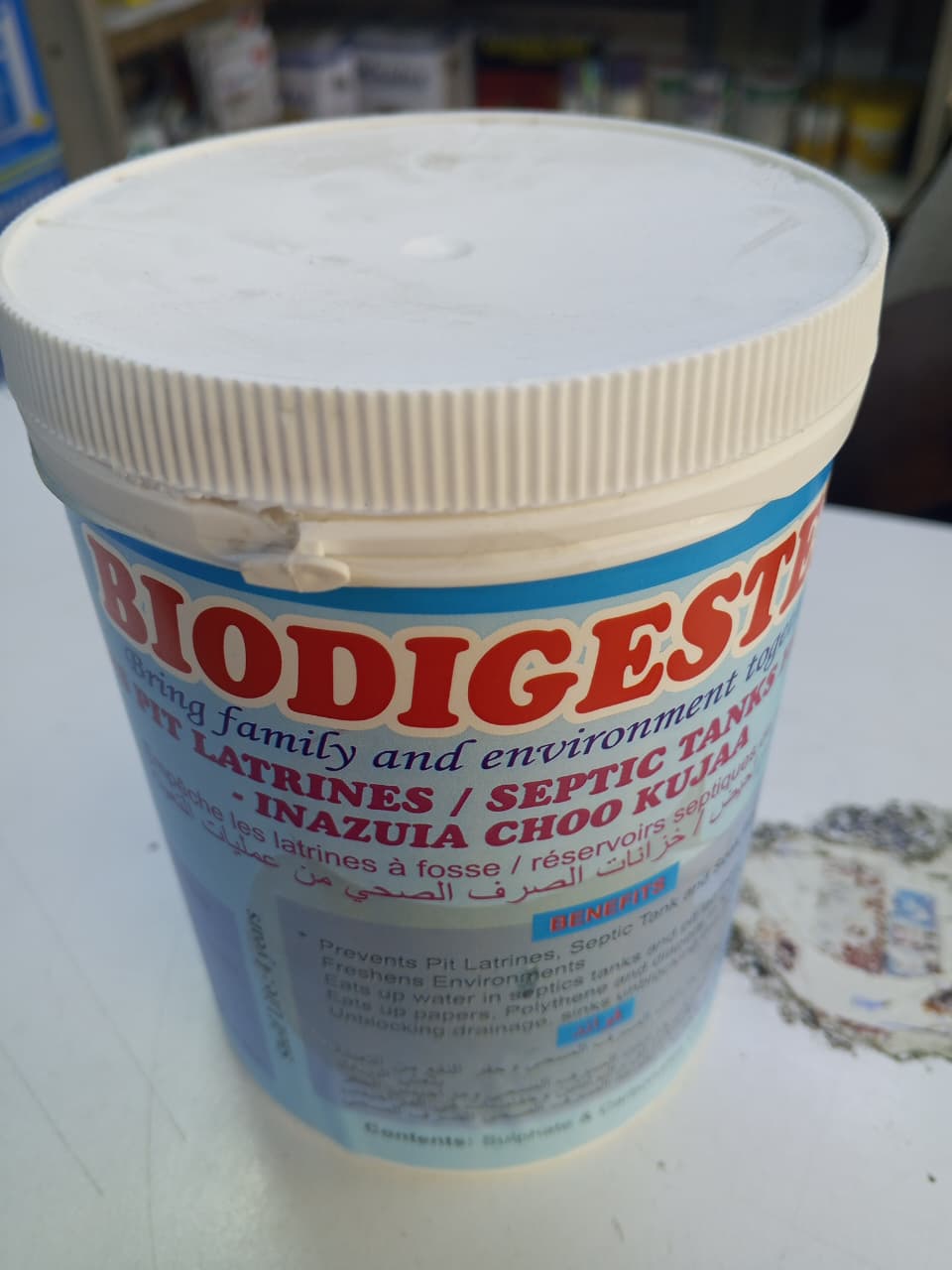
Biodigester
A biodigester is an eco-friendly waste management system that treats human waste and wastewater naturally, providing a hygienic, efficient, and sustainable alternative to traditional septic tanks. It helps reduce environmental pollution, minimize waste accumulation, and maintain a clean and healthy environment for homes, apartments, commercial buildings, and institutions. Biodigesters are durable, cost-effective, and designed for long-term waste management.
KES 1,199
KES 950
In stock
Genuine, PCPB-registered
Fast nationwide delivery
M-Pesa · Card · Pay on delivery
Product Details
<h1>Biodigester – An Eco-Friendly Wastewater Treatment Solution in Kenya</h1><h2>Product Overview</h2><p>A biodigester is a modern, environmentally friendly wastewater treatment system designed to manage human waste and organic waste efficiently. It provides an alternative to traditional septic tanks by using natural biological processes to break down organic matter, helping to improve sanitation and reduce environmental pollution.</p><p>Our <strong>Biodigester in Kenya</strong> is suitable for residential, commercial, and institutional properties, offering a practical sanitation solution for homes, apartments, hotels, schools, offices, and other facilities. It is designed to support effective wastewater treatment while helping property owners make better use of available space.</p><p>Whether you are constructing a new home, developing rental apartments, or upgrading an existing sanitation system, a biodigester can provide a convenient and sustainable solution when properly designed, installed, and maintained.</p><h2>Key Features and Benefits</h2><h3>1. Efficient Waste Treatment</h3><p>A biodigester uses naturally occurring microorganisms to break down organic matter in wastewater. This biological process helps reduce the accumulation of solid waste and supports effective wastewater treatment.</p><h3>2. Environmentally Friendly</h3><p>When correctly designed and operated, a biodigester helps manage wastewater responsibly and reduces the risk of environmental contamination. Appropriate treatment and disposal of the resulting effluent are essential to protect soil, groundwater, and nearby water sources.</p><h3>3. Space-Saving Design</h3><p>Biodigesters can be designed to fit different property sizes and site conditions. They are suitable for locations where space is limited, including residential plots, apartments, and commercial developments.</p><h3>4. Suitable for Different Properties</h3><p>Biodigesters can be designed for:</p><ul><li>Residential homes and private compounds</li><li>Rental apartments and flats</li><li>Hotels, lodges, and guest houses</li><li>Schools and educational institutions</li><li>Offices and commercial buildings</li><li>Restaurants and hospitality facilities</li><li>Other suitable residential and commercial developments</li></ul><p>The appropriate system capacity depends on the number of users, daily wastewater volume, soil conditions, and applicable installation requirements.</p><h3>5. Reduced Solid Waste Accumulation</h3><p>Biological treatment can help reduce the amount of organic solids requiring removal compared with systems that rely primarily on storing untreated waste. However, periodic inspection, desludging, and maintenance may still be necessary depending on the system design and usage.</p><h3>6. Convenient Wastewater Management</h3><p>A properly installed biodigester provides a structured method of managing wastewater generated by daily activities. It can be integrated into a property's sanitation plan to support hygienic and responsible waste management.</p><h3>7. Long-Term Sanitation Solution</h3><p>With suitable materials, correct installation, proper use, and regular maintenance, a biodigester can provide a reliable long-term wastewater treatment solution.</p><h2>How Does a Biodigester Work?</h2><p>A biodigester treats wastewater through a biological process involving microorganisms that break down biodegradable organic matter.</p><p>The process generally involves the following stages:</p><p><strong>Step 1: Wastewater Collection</strong></p><p>Wastewater from toilets and other approved sources enters the system through the designated inlet pipes.</p><p><strong>Step 2: Biological Treatment</strong></p><p>Microorganisms break down biodegradable organic material within the treatment chamber. The exact process depends on the biodigester's design and technology.</p><p><strong>Step 3: Separation and Treatment</strong></p><p>Solids and liquids are managed through the system's treatment stages, which may include settling, anaerobic digestion, filtration, or other treatment processes.</p><p><strong>Step 4: Effluent Management</strong></p><p>Treated wastewater leaves the system through an approved outlet or disposal arrangement. The effluent must be managed according to applicable environmental and public health requirements. It should not automatically be assumed safe for discharge or reuse without appropriate treatment and approval.</p><h2>Why Choose a Biodigester?</h2><p>Choosing a biodigester is an investment in modern sanitation and responsible wastewater management. It can help property owners manage household and commercial wastewater while making efficient use of available space.</p><p>Compared with a conventional septic tank, a biodigester may offer advantages in biological treatment and solid-waste management, depending on its design. However, the best option depends on the property, number of users, ground conditions, local regulations, and the quality of installation.</p><p>A properly selected system can help support:</p><ul><li>Improved wastewater management</li><li>More efficient use of available land</li><li>Reduced environmental pollution risks</li><li>Convenient sanitation for residential and commercial properties</li><li>Sustainable property development</li></ul><h2>Biodigester Installation and Maintenance</h2><p>For reliable performance, a biodigester should be designed and installed by qualified personnel. Before installation, the site should be assessed to determine the appropriate capacity, soil conditions, groundwater level, drainage requirements, and suitable effluent disposal method.</p><p>For effective operation:</p><ul><li>Avoid disposing of plastics, sanitary products, oils, and other unsuitable materials into the system.</li><li>Do not introduce excessive quantities of disinfectants or chemicals that may interfere with biological treatment.</li><li>Inspect the system periodically for blockages, leaks, and other faults.</li><li>Arrange professional maintenance and desludging when required by the system design.</li><li>Ensure wastewater discharge complies with applicable environmental and public health standards.</li></ul><h2>Buy Biodigesters in Kenya</h2><p>Are you looking for a reliable biodigester for your home, apartment, hotel, school, or commercial property in Kenya? A properly selected biodigester can provide a practical approach to wastewater treatment and sustainable sanitation.</p><p>Before purchasing, confirm the required capacity, construction materials, installation requirements, warranty, maintenance arrangements, and effluent disposal options.</p><p><strong>Choose a biodigester that meets your property's sanitation needs and supports responsible wastewater management.</strong></p><p>Contact our team for product information, capacity recommendations, pricing, and installation guidance.</p><h2>Frequently Asked Questions</h2><p><strong>1. What is a biodigester?</strong></p><p>A biodigester is a wastewater treatment system that uses biological processes to break down biodegradable organic matter.</p><p><strong>2. Is a biodigester suitable for residential homes?</strong></p><p>Yes. Biodigesters can be designed for residential homes, provided the system has sufficient capacity and meets site and regulatory requirements.</p><p><strong>3. Can a biodigester serve apartments and commercial buildings?</strong></p><p>Yes. Larger systems can be designed for apartments, hotels, schools, and commercial facilities based on the expected wastewater volume and number of users.</p><p><strong>4. Does a biodigester require maintenance?</strong></p><p>Yes. Although biological treatment can reduce solid-waste accumulation, regular inspection and maintenance remain important. Desludging requirements depend on the system design and operating conditions.</p><p><strong>5. Is the water discharged from a biodigester safe for use?</strong></p><p>Not necessarily. The quality of discharged wastewater depends on the treatment technology and operating conditions. Additional treatment and regulatory approval may be required before discharge or reuse.</p><p><strong>6. How do I choose the right biodigester size?</strong></p><p>The appropriate size depends on the number of users, daily wastewater generation, property type, site conditions, and the manufacturer's design specifications. A qualified professional can help determine the correct capacity.</p>
Active ingredient / Composition
Target pest / crop
Application / Dosage rate
Suitable crops
Available pack sizesDefault
Brand / Manufacturer
Safety & PPE Guidance
Related Products
You may also need these.
--38.0%
 --9.0%
 --2.0%
 --13.0%